
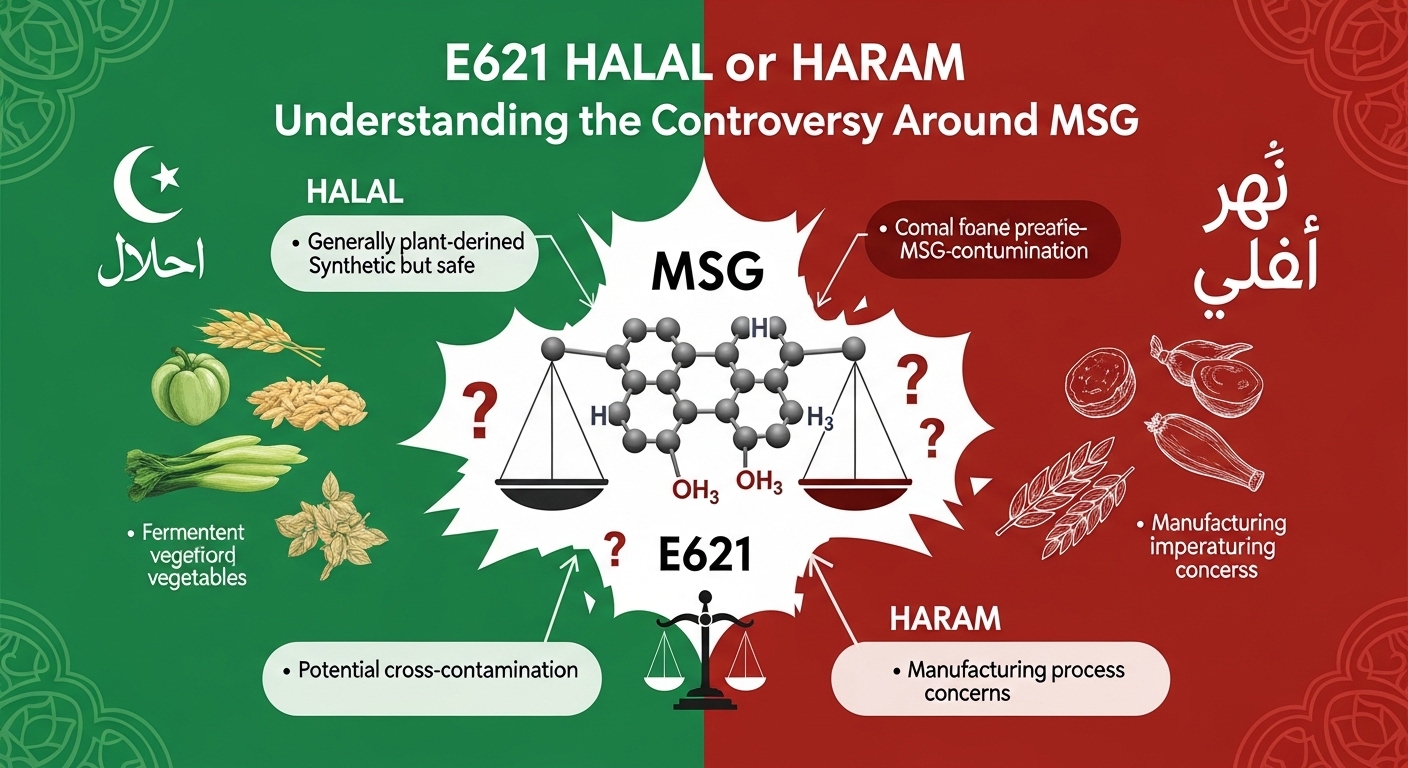

In today’s global food industry, additives and flavor enhancers are used widely to improve taste and shelf life. One of the most common ingredients is E621, also known as monosodium glutamate or MSG. While it is popular for enhancing the flavor of snacks, soups, and processed foods, many people in the Muslim community question whether E621 is halal or haram. The uncertainty arises due to concerns about its source, manufacturing process, and potential health effects. With dietary restrictions being an important aspect of Islamic practice, understanding the halal status of E621 has become essential for conscious consumers. Exploring the origins, processing methods, and religious considerations surrounding E621 can provide clarity and help individuals make informed decisions about including this additive in their diet.
What Is E621 and How Is It Used
E621, commonly known as monosodium glutamate, is a flavor enhancer used to intensify the taste of food. It is naturally found in certain foods such as tomatoes, cheese, and mushrooms, but the commercially produced version is often derived from fermented starches, sugar beets, or molasses. In processed foods, E621 is valued for its ability to create the umami flavor, giving dishes a savory taste that appeals to many consumers. It is used in a variety of products including snacks, instant noodles, canned soups, and seasoning mixes. While E621 is generally recognized as safe by food authorities, its source and production method are important factors for those following halal dietary guidelines. Determining whether E621 is halal or haram involves understanding how it is made and whether animal-derived substances are involved in the process.
Manufacturing Process and Halal Considerations
The halal or haram status of E621 largely depends on its manufacturing process. While MSG can be produced from plant-based sources such as corn, sugar cane, or cassava, some production methods may involve bacterial fermentation that uses enzymes derived from non-halal animals. If animal-derived ingredients from non-halal sources are involved in the production, E621 may be considered haram for Muslims. On the other hand, MSG produced entirely from plant-based materials or halal-certified fermentation processes is generally regarded as halal. Consumers seeking assurance can look for halal certification labels on food products containing E621. Understanding the production process is essential because it is the origin of the additive, rather than its chemical composition, that determines whether it aligns with Islamic dietary laws.
Health Concerns and Misconceptions
Some people question the use of E621 due to health concerns, which can influence perceptions of halal or haram status. While MSG has been linked to anecdotal reports of headaches or nausea in sensitive individuals, scientific studies have not conclusively proven that it is harmful when consumed in moderate amounts. These health considerations, however, are separate from religious guidelines. The halal or haram discussion focuses on the source of the additive rather than its potential health effects. Educated consumers should differentiate between health-related warnings and religious compliance. Checking for halal certification ensures adherence to Islamic dietary principles while making informed choices about consumption. Understanding these distinctions can help prevent confusion and guide Muslims in selecting food products responsibly.
Halal Certification and Labeling
Halal certification plays a critical role in confirming whether E621 is permissible for consumption. Reputable certification authorities examine the production process, sources of raw materials, and potential contamination risks. Products carrying a halal certification logo provide assurance that the MSG used in their manufacturing complies with Islamic dietary laws. For individuals who are concerned about the halal or haram status of E621, relying on certified products is the most reliable approach. In addition, checking the ingredients list and manufacturer information can help identify whether plant-based or animal-derived sources are involved. Halal certification provides transparency and enables consumers to make choices confidently, reducing doubts about the permissibility of food additives like E621.
Making Informed Choices as a Consumer
Understanding whether E621 is halal or haram requires careful attention to sourcing, production, and certification. Consumers should research brands, read product labels, and seek halal-certified options when necessary. Awareness of ingredient origins and manufacturing practices empowers individuals to align their dietary habits with religious principles. Additionally, being informed about the differences between plant-based and animal-derived MSG can prevent accidental consumption of haram products. By prioritizing halal-certified products and staying educated about food additives, consumers can enjoy a variety of processed foods without compromising their beliefs. Responsible choices ensure that dietary practices remain consistent with both health and religious considerations.
Conclusion
The question of E621 halal or haram depends primarily on its source and manufacturing process. Plant-based or halal-certified MSG is generally permissible, while products involving non-halal animal-derived substances should be avoided. Understanding production methods, checking for certification, and remaining informed about ingredient origins are key steps in making responsible dietary decisions. By carefully considering these factors, Muslim consumers can enjoy foods containing E621 while adhering to their religious guidelines.